
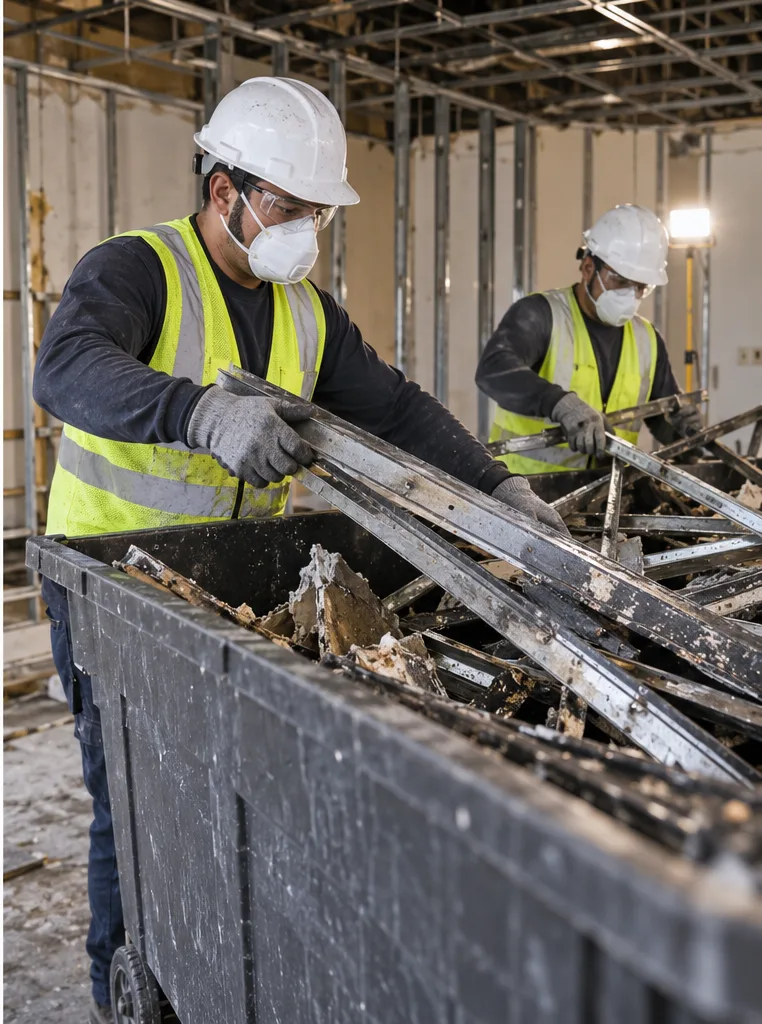
Commercial fire demolition brings more parties into the same decision: ownership, tenants, property management, the insurer, engineers, authorities, restoration teams, utility providers, and the demolition contractor. Put their decisions into one written sequence.
Name the operating constraints
Identify occupied areas, public entrances, delivery windows, alarm and sprinkler conditions, shared utilities, neighboring tenants, elevators, loading docks, and any business records or equipment that remain. The demolition plan should protect what still operates.
Use a responsibility table
| Decision | Named owner |
|---|---|
| Release of the fire scene | Authority or investigator |
| Structural access limits | Qualified structural professional |
| Covered scope | Owner and insurer representatives |
| Utility isolation | Responsible utility or licensed trade |
| Demolition sequence | Contractor under the approved plan |
| Tenant and public communication | Property management |
Plan the handoff between trades
State when environmental work, contents work, demolition, drying, cleaning, temporary enclosure, and reconstruction can begin. Include who confirms completion at each handoff. This prevents a crew from arriving while another trade still controls the same area.
Document changes before they spread
Hidden conditions are common after fire. Use one change path that records the discovery, photographs it, identifies the decision-maker, and updates the removal boundary before the added work proceeds.
Coordination questions
- Which areas remain occupied?
- Which systems must stay live?
- Who can approve changes?
- Where can a container or truck stand?
- What hours are available for noisy or dusty work?
- What records must accompany the handoff?
Safety and regulatory note
OSHA describes demolition as construction in reverse with added hazards and calls for an engineering survey by a competent person before demolition. EPA guidance also warns that damaged buildings can contain asbestos, lead, PCBs, tanks, and other hazards that need appropriate handling. Use the responsible authority and qualified professionals for the actual property.
Review the companion fire damaged building cleanup service page, or prepare the details needed for an estimate.