
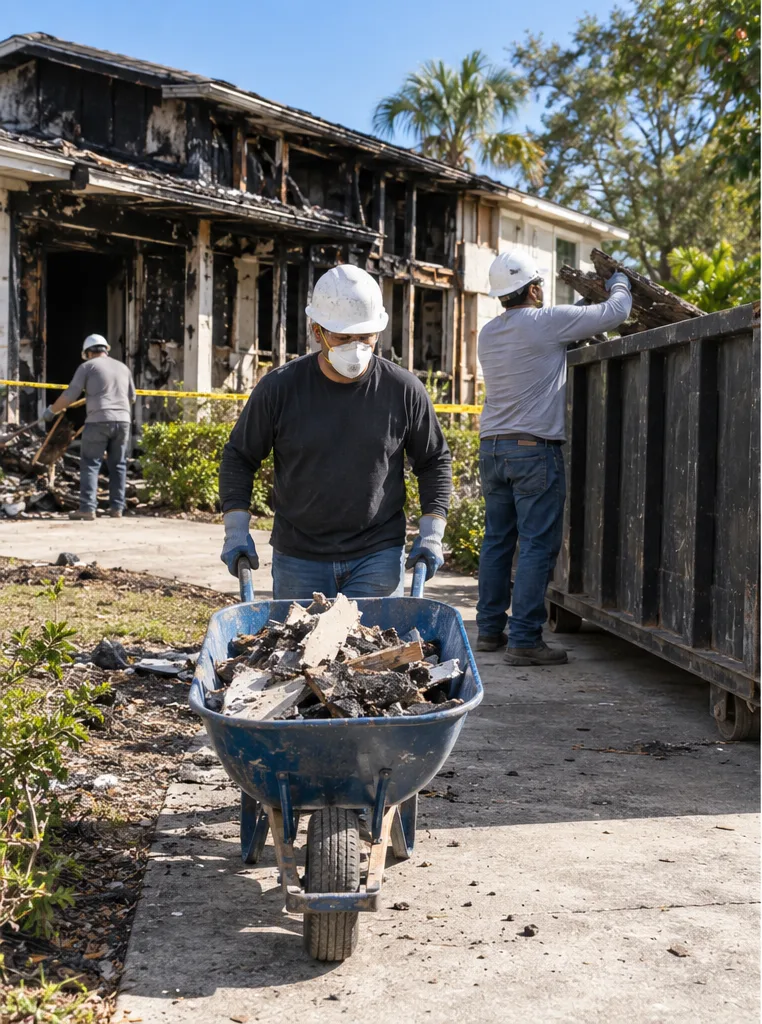
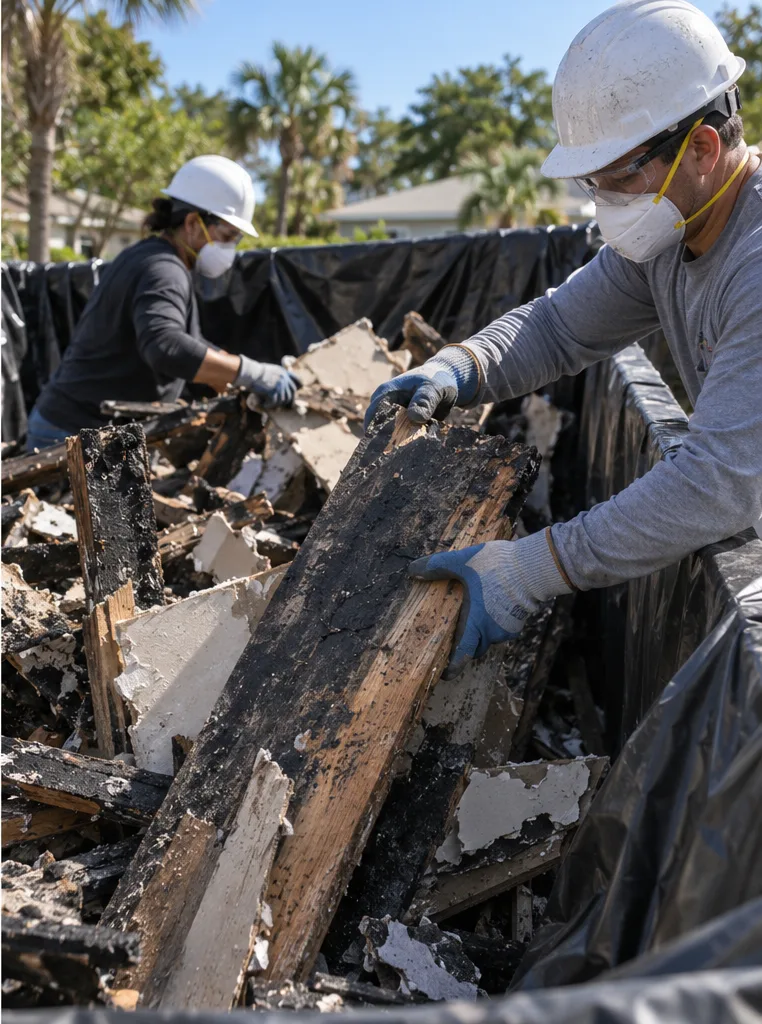
Define the work boundary before cleanup or removal begins
Fire changes a building unevenly. One room can contain charred finishes, weakened framing, wet materials from suppression, and assemblies that appear unaffected. The written scope should identify what is approved for cleanup or removal, what must stay, and who can change that decision.
The property also needs a safe access plan. Crews need to know whether authorities have released the site, which utilities are secured, where debris can move, and whether an engineer, adjuster, restoration contractor, or environmental professional has set conditions for the work.
Scope may include
- Debris staging plan
- Loading-path review
- Container or haul-away coordination
- Separation of materials requiring special handling
Handled separately
- Unknown chemicals or sealed containers
- Hot ash or active fire debris
- Unclassified regulated materials
- Municipal pickup coordination unless agreed in writing
What shapes the estimate
Pricing depends on the approved work area, building type, material volume, access, floor level, utility status, equipment needs, debris classification, haul distance, and protection required for surfaces that remain. Photos help with an early conversation, but a fire-damaged property may still require an on-site review before a written scope is possible.
A practical work sequence
Release
Confirm that the authority, owner, and insurer have released the relevant area for assessment or work.
Mark
Identify cleanup or removal limits, protected areas, utilities, access points, and materials needing separate handling.
Work
Follow the written sequence while monitoring the structure and protecting adjacent areas.
Clear
Stage, load, and route approved debris to the proper destination, then review the agreed handoff condition.
Questions worth answering early
Can cleanup or removal start as soon as the fire is out?
Not automatically. The relevant authority, insurer, and property team may need to release the site, and unsafe areas may need engineering controls before entry.
Can you quote from photos?
Photos can show the affected area and access, but hidden damage, material type, utilities, and structural conditions may require a site review.
What if asbestos or another regulated material is suspected?
Stop and identify the material through the appropriate qualified professional. Regulated material work needs its own compliant scope.
Does removal include rebuilding?
Cleanup, demolition, and reconstruction are separate scopes unless a written agreement states otherwise.