
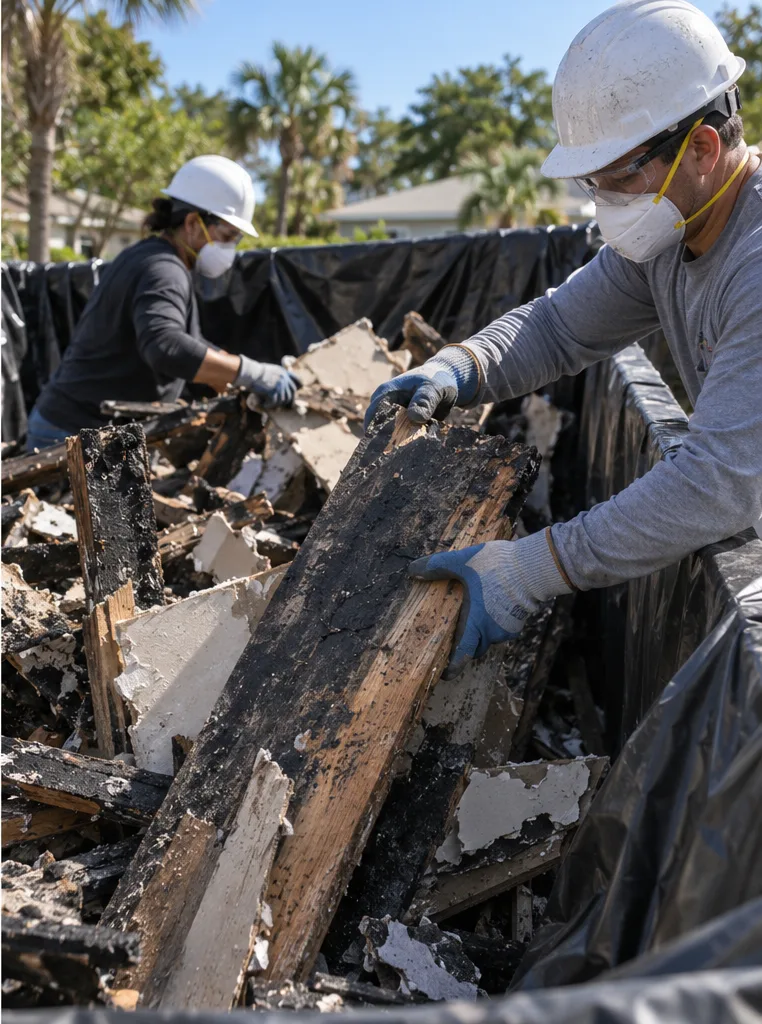
Fire debris can mix ordinary building material with sharp objects, wet contents, damaged electrical components, and materials that need separate handling. The first task is to identify the debris stream, not to load the nearest truck.
Confirm the material can move
Ask whether the site has been released, whether evidence must remain undisturbed, and whether an environmental assessment identified asbestos, lead, chemicals, fuel, cylinders, batteries, or other regulated items. Unknown containers stay put until the responsible party identifies them.
Walk the loading route
Measure gate width, overhead clearance, driveway slope, soft ground, stair width, elevator rules, and the distance between the debris and the truck or container. A shorter safe route can change labor and floor-protection needs more than the size of the pile.
Before the truck arrives
- Mark the approved debris
- Separate items that must remain
- Confirm utility hazards are controlled
- Reserve legal container or truck space
- Protect occupied and finished areas
- Identify special material streams
- Set dust and weather controls
- Agree on the final sweep and handoff
Use volume and density, not room count
Two rooms can produce very different loads. Charred framing, broken masonry, wet drywall, metal, and household contents fill and weigh a container differently. Photos with a known reference dimension and a written material list improve the first estimate.
Keep disposal records with the project file
The contract should identify what records will be provided for loads requiring documentation. Keep those records with permits, reports, releases, and change approvals.
Safety and regulatory note
OSHA describes demolition as construction in reverse with added hazards and calls for an engineering survey by a competent person before demolition. EPA guidance also warns that damaged buildings can contain asbestos, lead, PCBs, tanks, and other hazards that need appropriate handling. Use the responsible authority and qualified professionals for the actual property.
Review the companion fire debris removal service page, or prepare the details needed for an estimate.