
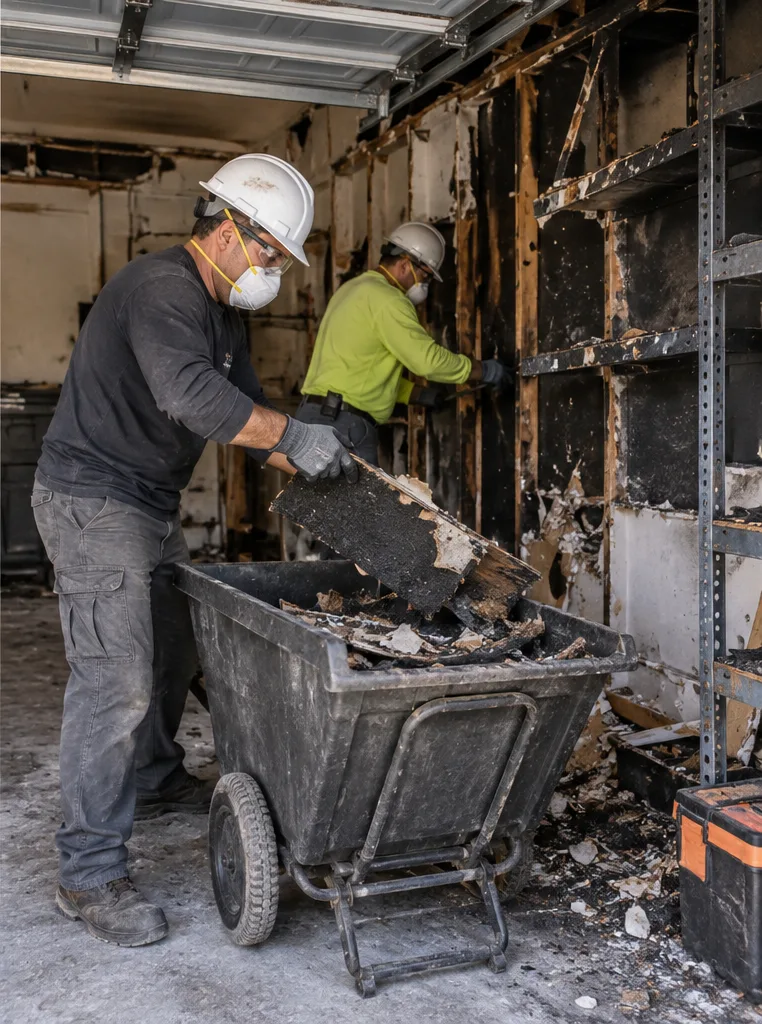
Prepare the decisions and access before preparing the rooms. Owners should not move through an unsafe structure, disconnect utilities, or begin opening walls to make demolition easier.
Secure the property and follow the release process
Keep unauthorized people out. Save notices from the fire department, building authority, insurer, engineer, and utility providers. If the structure has restricted areas, include them on a simple sketch for every visitor.
Make a keep, remove, and undecided list
Work room by room. Put each material or item into one of three columns. Anything undecided should remain protected until the named decision-maker responds. This keeps sentimental items, records, fixtures, and reusable materials from being treated as ordinary debris.
| Prepare | Do not do yourself |
|---|---|
| Collect written releases and reports | Enter an area marked unsafe |
| Photograph safe exterior access | Cut or cap utilities without the proper trade |
| List gates, parking, pets, and neighbors | Disturb suspected regulated material |
| Mark protected belongings from a safe area | Remove evidence before it is released |
Prepare the exterior route
Move vehicles from the planned work and loading area, confirm gate codes, identify irrigation or septic features, and note soft ground or low branches. Ask before removing fencing or using neighboring property for access.
Choose one project contact
Give the field team one person who can answer scope questions and reach the owner, adjuster, engineer, or restoration lead. A clear contact path prevents several people from giving conflicting directions.
Safety and regulatory note
OSHA describes demolition as construction in reverse with added hazards and calls for an engineering survey by a competent person before demolition. EPA guidance also warns that damaged buildings can contain asbestos, lead, PCBs, tanks, and other hazards that need appropriate handling. Use the responsible authority and qualified professionals for the actual property.
Review the companion fire damaged house demolition service page, or prepare the details needed for an estimate.